


Everything You Need to Know Before Visiting the Acropolis: The Ultimate Strategic Guide

When the modern visitor steps onto the Sacred Rock of Athens, they are immediately struck by a profound sense of awe. Looking at the gleaming, minimalist white columns against the blue sky, it is natural to believe you are witnessing the monuments of Pericles exactly as they were left behind by the relentless passage of time.

This is an illusion. What the visitor sees today is a layered system of transformations. The Acropolis is not simply an archaeological site; it is the structural origin of Western civilization. It served as a Neolithic refuge, a Mycenaean fortress, a classical manifesto, a Christian church, a Frankish palace, and an Ottoman garrison.
To ascend the Acropolis is not merely to visit a monument. It is to move through a constructed sequence of meaning. Without preparation, the experience fragments into disconnected images, exhaustion, and crowds. With the correct framework, the site reveals itself as a complete composition.
Here is everything you need to know—from tactical logistics to architectural decoding—before you visit the Acropolis.
Part 1: The Logistics (Survival and Strategy)
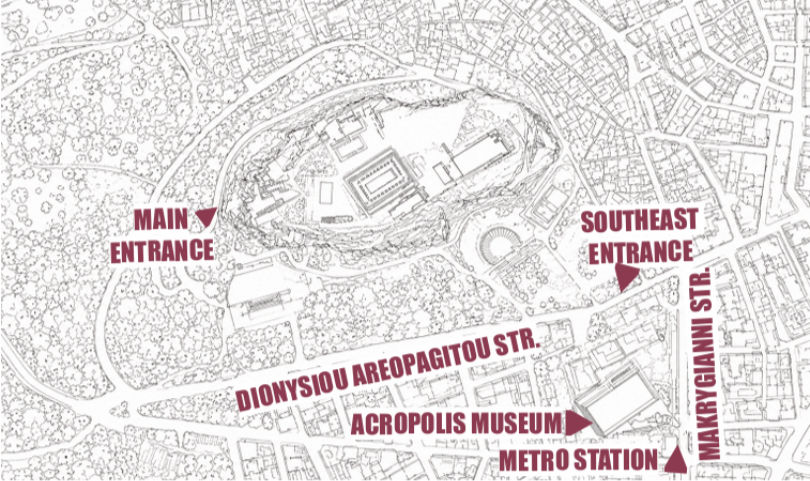
The Acropolis of Athens dominates the city center, attracting millions of visitors annually. Navigating it requires strategic precision before you even reach the ticket office.
The 08:00 RuleTiming is your most critical asset. The optimal time to visit is early morning. Your objective is to be on the pedestrian avenue of Dionysiou Areopagitou just before 08:00, entering the site exactly at opening time. By 09:30, tourist buses and cruise groups saturate the infrastructure. Early arrival secures near-exclusive access for observation and allows you to avoid the punishing midday Attic sun.
The Entrance Hack: Avoid the Main GateThe biggest mistake visitors make is blindly following the signs to the Main Entrance (on the west side of the Rock). This is where all the tour buses stop, creating suffocating congestion. Instead, head to the Southeast Entrance, located along Dionysiou Areopagitou, directly opposite the Acropolis Museum. The queues here are significantly shorter, and it allows you to ascend gradually through the historically rich South Slope, ultimately exiting through the Main Gate in a perfect, unidirectional loop.
Ticketing and The "Combined" TrapNever wait in line to buy a physical ticket. Purchase your general admission ticket online exclusively through the official state platform (hhticket.gr).Crucial Note: The Acropolis Museum is an independent institution. Your ticket for the archaeological site does not grant you access to the museum. You must purchase a separate ticket for the museum via its official website.
Non-Negotiable Site Rules
Footwear: The marble of the Acropolis has been polished by millions of feet over 2,500 years. It is dangerously slippery, even when dry. Wear strictly closed, anti-slip athletic shoes.
Hydration: There is no shade, no kiosk, and no café at the summit. Bring cold water.
Baggage: Avoid large backpacks. You will be forced to leave them at the cloakroom, wasting valuable time.
The Stone Rule: It is strictly forbidden to take even the smallest stone from the ground as a souvenir. The site is closely monitored.
Part 2: Decoding the Ascent (The South Slope)
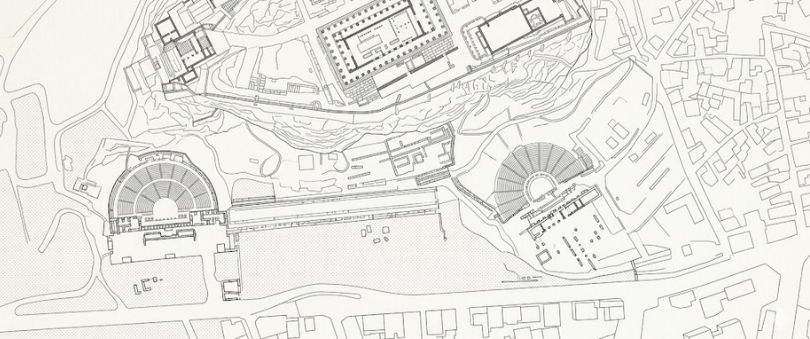
Entering from the southeast, you do not immediately see the Parthenon. You walk through the South Slope, the zone of lived civic experience where ancient Athenians sought entertainment and healing.
The Birthplace of Drama (Theatre of Dionysos)As you walk, you will encounter a vast hollow structure cut into the rock. This is the Theatre of Dionysos, the point of origin for Western drama. Here, the works of Aeschylus, Sophocles, and Euripides were not revived, but created. Walk down to the orchestra and observe the Proedria—the front row consisting of 67 elaborate marble thrones reserved for priests and magistrates, including the central, highly ornate seat of the Priest of Dionysos.
The Ancient Hospital (The Asklepieion)Further west lies the Asklepieion, founded in 420 BC during the devastating Athenian plague. This was a healing sanctuary where patients underwent enkoimesis (ritual sleep), believing the god Asklepios would heal them in their dreams. Look closely at the ruins: you will see the foundations of an Early Christian basilica built directly over the ancient sanctuary, a clear architectural palimpsest where the new faith absorbed the prestige of the pagan healer.
The Roman Marvel (Odeion of Herodes Atticus)At the end of the slope rises a colossal, multi-story stone facade with Roman arches. Built in 161 AD by the wealthy philosopher Herodes Atticus in memory of his wife, this roofed concert hall (which originally featured an extraordinary cedar roof spanning the entire width) accommodated 5,000 spectators and still hosts performances today.
Part 3: The Summit and the Masterpieces

As you climb the steep western edge, you pass the Beulé Gate (a Late Antiquity defensive structure built with recycled marbles) and face the Propylaia.
The Propylaia: The Architecture of IllusionDesigned by Mnesikles, this monumental gateway was built to prepare the visitor for the visual shock of the Parthenon. Notice the central columns: the gap between them is exceptionally wide to allow the Panathenaic procession to pass. To support the massive marble beams (epistylia) over this wide gap, Mnesikles hollowed out the interior of the marble, reducing weight without sacrificing strength—a principle still used in modern steel engineering.
The Parthenon: The Monument of the MassesExiting the Propylaia, the Parthenon dominates your visual field. It was not a conventional temple with an active priesthood; it was the imperial treasury of the Delian League and the impenetrable house of the colossal, 12-meter-tall chryselephantine (gold and ivory) statue of Athena Parthenos by Phidias.
To make this massive structure appear perfectly straight under the glaring Attic light, the architects Iktinos and Kallikrates applied precise optical refinements:
The Curvature: The floor is not flat; it bulges upward in the center like a turtle shell.
Entasis: The columns are not straight cylinders; they swell slightly in the middle to appear as living muscles bearing weight.
The Invisible Pyramid: All columns lean slightly inward.
The Parthenon was also a political weapon. Financed by Pericles using allied funds, its construction served as a massive public works program that paid poor Athenian citizens (the thetes) one drachma a day, securing their financial independence and cementing the radical democracy.
The Erechtheion: The True Sacred HeartWhile the Parthenon was the imperial treasury, the asymmetrical Erechtheion to the north was the true religious epicenter. It housed the ancient olive-wood idol of Athena. Its strange shape exists because it had to accommodate multiple cults and sacred marks: the spot where Athena's olive tree grew, and the exact hole in the rock where Poseidon struck his trident during their mythical contest for the city.
On its south side stands the Porch of the Maidens. The six Caryatids are not slaves; they are aristocratic mourners standing directly over the mythical tomb of King Kekrops. The glaring empty pedestal you will see belongs to the third sister, violently removed by Lord Elgin in the 19th century and currently held in the British Museum.
Part 4: The Built Trauma and the Walls
Before leaving the Rock, look at the northern fortification walls. You will see massive, cylindrical marble column drums embedded directly into the masonry. These are not random building materials. They are the "Built Trauma."
When the Persians sacked Athens in 480 BC, they burned the Acropolis to the ground. When the Athenians returned, they took the charred remnants of their destroyed temples and built them into the new defensive wall. It was an intentional, visible war memorial—a constant reminder of barbarian impiety. The shattered statues were respectfully buried in pits (the Perserschutt), an act that accidentally preserved their original vibrant paint for 2,500 years.
Part 5: The Mirror of the Rock (The Acropolis Museum)
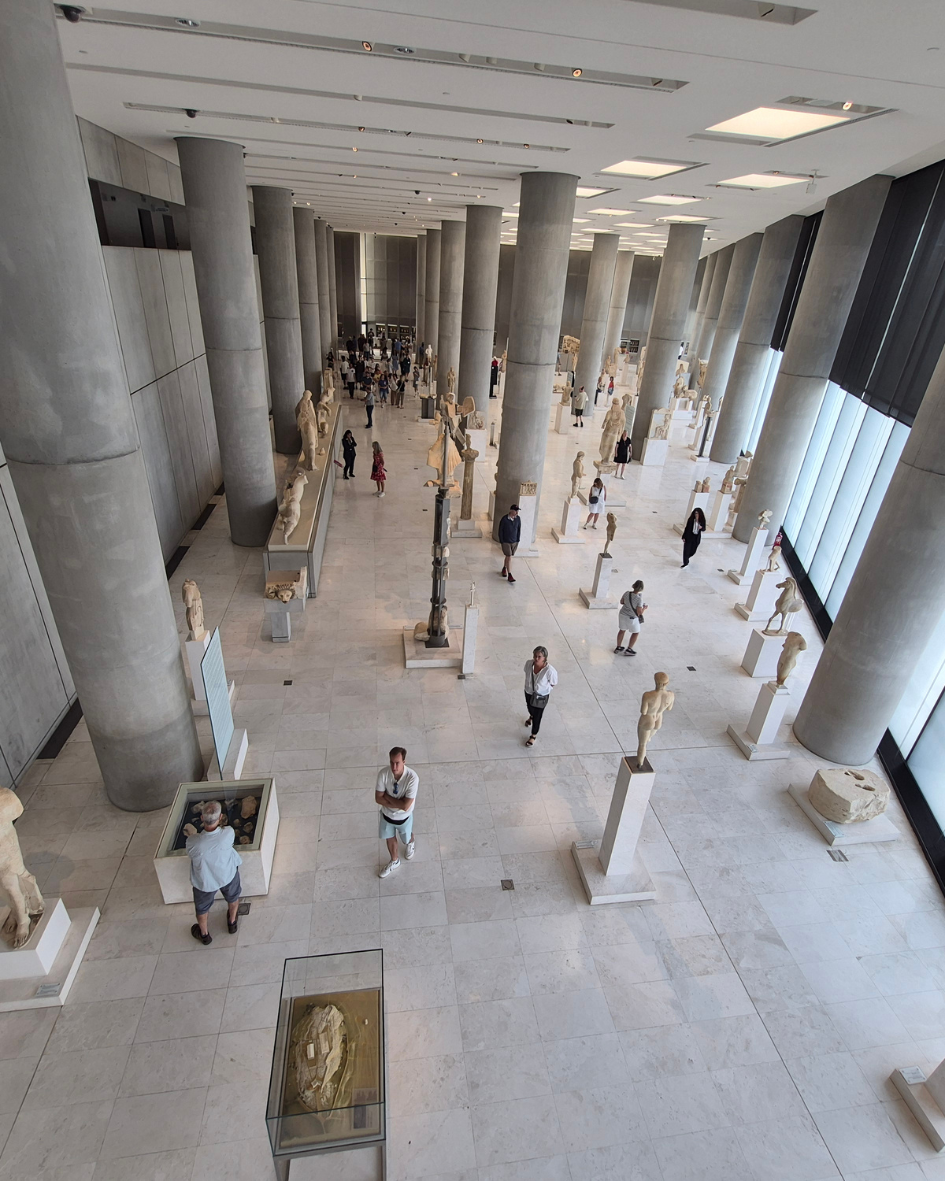
Your visit is incomplete without descending to the New Acropolis Museum, located 300 meters away. Do not treat this building merely as a modern container for ancient statues. It is an architectural mirror of the Acropolis itself, designed by Bernard Tschumi as an "architecture of evacuation" to save the deteriorating marbles from modern pollution.
The Floating Foundations: The museum hovers on concrete pillars over a massive, excavated ancient Athenian neighborhood (the Makrygianni plot). You walk over the transparent floors, observing the everyday life of Late Antiquity before ascending to the realm of the gods.
The Forest of the Korai: On the first floor, you will encounter the Archaic statues. Notice the traces of original red and blue pigments. The classical world was not white; it was a riot of color.
The Rotated Cube: The top floor (The Parthenon Gallery) is a glass box physically rotated by 23 degrees from the rest of the building so that it aligns perfectly with the actual Parthenon visible through the window. Here, the surviving original frieze blocks sit next to stark white plaster casts of the pieces looted by Elgin—a fierce, living demand for reunification.
Conclusion
The Acropolis does not ask for passive admiration. It asks for interpretation. It is a testament to the fact that perfection was built by labor, empire, ambition, political violence, and continuous reinterpretation. The marble is radiant, but it is not innocent.
Once you learn to read it, the white marble no longer appears silent. The monuments talk back to history, and by understanding their code, you ensure that the narrative of Classical Athens remains alive.


Comments